Teaching Sustainability
The Importance of Teaching Sustainability Across Disciplines
Addressing climate change and sustainability challenges requires contributions from all academic disciplines. The physical and life sciences form the foundation for understanding Earth systems, climate processes, and ecosystem change. Engineering, technology, and applied sciences contribute to the development of innovative solutions. The social sciences deepen our understanding of human behavior, governance, and the uneven distribution of climate impacts across communities. The humanities and arts offer critical perspectives on culture, ethics, communication, and storytelling, shaping how societies interpret and respond to environmental change. Integrating these diverse perspectives is essential for advancing meaningful climate action and ensuring a just future for all.
Integrating sustainability into curricula across disciplines aligns directly with the University of Maryland’s institutional commitments. UMD’s Fearlessly Forward strategic plan emphasizes addressing the grand challenge of climate change by reimagining how we pursue, discover, and champion knowledge, leveraging our diverse community to excel and foster strong connections with our surrounding communities, and creating a better future by uniting for a common purpose. UMD faculty have the responsibility to help equip students with the foundational knowledge, interdisciplinary mindset, diverse perspectives and skillsets, creativity, and sense of hope to address pressing sustainability issues and improve the lives of every person on earth.
Resources for Teaching Sustainability
Association for the Advancement of Sustainability in Higher Education (AASHE)
As a member institution of AASHE, all UMD faculty can access their comprehensive library of resources. From virtual education programs to case studies, faculty can leverage sustainability-focused tools and a global network of peers. The Sustainability Tracking, Rating, and Assessment System (STARS) is one program administered by AASHE to provide a tangible framework for sustainability performance over time and across higher-ed institutions. Explore UMD's 2025 Gold Rated Report, to see the broad range of sustainability areas assessed.
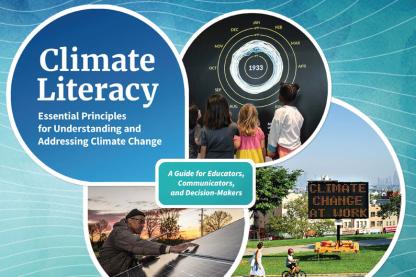
Climate Change Resources for Educators and Students
The U.S. Environmental Protection Agency offers a collection of federal and non-governmental resources designed to support educators and students in understanding climate science, including its impacts and solutions. This hub includes curriculum materials, activities, data tools, and interactive content that can be used by a wide range of audiences and disciplines. One such resource, Climate Literacy: Essential Principles for Understanding and Addressing Climate Change presents key principles for understanding Earth’s climate system, the impacts of climate change, and pathways toward solutions and mitigation strategies.
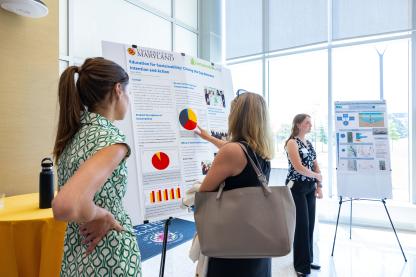
University Climate Change Coalition (UC3)
Faculty, researchers, and staff at UC3 member institutions have the opportunity to accelerate climate action efforts on campus, in their communities, and as a global coalition by connecting with counterparts from peer institutions, sharing knowledge and best practices, and collaborating on the development of new resources that help scale action beyond what individual universities can achieve on their own. As a charter-signatory of the Climate Leadership Network at Second Nature, UMD shares its SIMAP reports. Second Nature also has climate action resources relating to Climate Justice and Climate Resilience.
UMD-Focused Resources
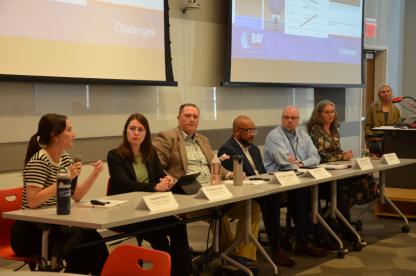
Sustainability Across the Curriculum Workshop
The Office of Sustainability hosts an annual Sustainability Across the Curriculum Workshop to offer faculty an introductory training on integrating sustainability into their diverse curricula and disciplines. In the upcoming June 2026 workshop, participants will learn how to leverage UMD’s campus and sustainability programs as living learning laboratories and go beyond environmental sustainability to explore transdisciplinary connections with their work and the evolving concept of sustainability.
Sustainability Advisor Presentation
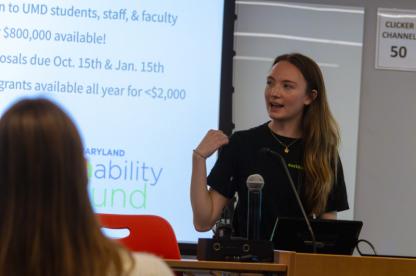
Sustainability Advisors are trained in peer-to-peer education and campus sustainability, and as upperclassmen, they can share their experiences, campus resources, and involvement opportunities with new students. Advisors are available to deliver a 30-minute interactive lesson to your class each fall. This engaging lesson will introduce your students to the topic of sustainability, campus and global sustainability goals, and involvement opportunities on campus.
SustainableUMD Progress Hub
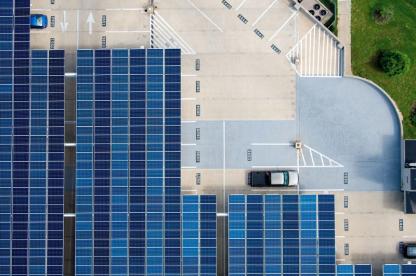
Explore the measurable steps UMD is taking towards achieving campus sustainability initiatives. The "Measuring Progress" dashboards are a comprehensive set of quantitative data that show metrics from annual university greenhouse gas emissions to the amount of composted food waste. Faculty can pull data from the Progress Hub to include in lectures or share the tool with students as a resource for projects.
Grants
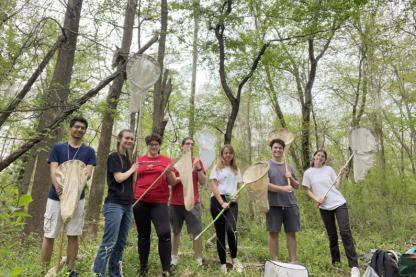
Teaching Innovation Grants offered by the TLTC invite the UMD instructional community to submit proposals that maximize our teaching impact through accessible and inclusive practices. Sustainability Grants are available to any student, faculty, or staff member at UMD to receive funding for initiatives and projects that benefit sustainability. The Do Good Campus Fund supports the substantial efforts happening across UMD, aimed at reimagining learning and serving humanity inside and outside the classroom. Projects centered on social, economic, or environmental sustainability are encouraged to apply.
Sustainability Teaching Certificate
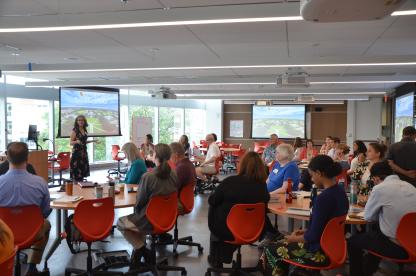
This digital course series helps faculty prepare students to think about problems in new ways, engage more effectively with solutions, and build a positive outlook grounded in agency and hope. The first of 4 courses in the series, Basics, introduces foundational concepts of sustainability including the 3 pillars, the importance of systems thinking and challenges instructors to reflect on how this information relates to their own field and courses. To enroll in the Canvas course, email Dr. Elisabeth Smela at smela@umd.edu.
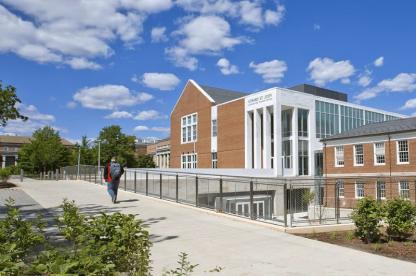
Teaching & Learning Transformation Center
The Teaching & Learning Transformation Center (TLTC) drives academic excellence through pedagogy and promoting a culture of effective, engaging, and inclusive approaches to teaching and learning. The TLTC is dedicated to the professional development of all members of the campus teaching community as it supports evidence-based learning and teaching practices. The instructional design team and faculty coaches are eager to partner with faculty, graduate students, postdocs, and administrators.
Specific Resources for Colleges and Schools
Sustainability challenges and the solutions they inspire span every discipline and subdiscipline. Addressing them requires both depth and breadth to understand how local and disciplinary questions connect to wider social, environmental, and global systems.
The Center for the Advancement of Teaching Excellence at the University of Illinois Chicago has created specific learning objectives and sample activities for the 17 United Nations Sustainable Development Goals (SDGs) across disciplines. Additionally, the resources below offer a sampling of how sustainability is explored across diverse academic areas. Reach out to dfrye@umd.edu and sholt@umd.edu with any suggestions for additional resources.
A. James Clark School of Engineering
Relevance to the field
Sustainability-focused engineering education prepares students with the technical and ethical competencies needed to design resilient, efficient, and equitable solutions for the systems and structures that shape modern society.
Resource articles
- Sustainability in engineering education: A review of learning outcomes
- Educational responses to sustainability in engineering programs: practices and prospects
- Rethinking sustainability in engineering education: a call for systemic change
- Sustainability in (engineering) education through reclaiming and reusing electronic components from e-waste: a last decade research review
- Leveraging Sustainability to Teach About Social Justice in Civil Engineering Curricula
Additional resources
College of Agriculture and Natural Resources (AGNR)
Relevance to the field
Sustainability is central to agriculture and natural resources management because modern food systems must balance productive, profitable practices with the stewardship of soils, water, and ecosystems. AGNR students will play a key role in strengthening the systems that support communities, resilient landscapes, and equitable access to healthy food.
Resource articles
- Environmental sustainability in agriculture: Identification of bottlenecks
- Food Waste to Food Security: Transition from Bioresources to Sustainability
- Nutrition and food science & technology: Vital symbiosis for sustainable health
- Smart and sustainable agriculture: Fundamentals, enabling technologies, and future directions
- Social sustainability in agriculture– A system-based framework
School of Architecture, Planning and Preservation
Relevance to the field
Sustainability in architecture, planning, and preservation focuses on responsible design of the built environment in ways that consider materials, environmental impact, and resilience. Students in this field will need to consider how equitable access, cultural stewardship, and sustainable growth can help communities flourish.
Resource articles
- (Book) Constructive Disobedience: An Experimental Methodology in Architecture
- Increasing citizen engagement in sustainable architecture using augmented reality: A pilot study
- Teaching Sustainability in Architecture through Collaborative Online International Learning
- The role of green building materials in sustainable architecture: Innovations, challenges, and future trends
- Towards the microbial home: An overview of developments in next- generation sustainable architecture
College of Arts and Humanities
Relevance to the field
Arts and humanities cultivate powerful narratives which move beyond technical solutions to express our relationships with and responsibility to the natural world, apply humanistic inquiry to environmental problems, and give people the ability to imagine the world they want to live in.
Resource articles
- Creative arts for sustainability transformations-Exploring children’s theater for the UN Sustainable Development Goals
- Eco‑Spiritual Synergy: Harnessing Hindu and Islamic Teachings for Effective Conservation Strategies
- Our Brains on Art: An Ancient Prescription for 21st Century Solutions
- Showing and doing: Art & Science collaborations for Environmental sustainability
- The Challenges of Decolonising Sustainability and the Environment in Development Studies (DS)
- The role of alternative metals in enhancing creativity and sustainability in art education: A qualitative study
College of Behavioral and Social Sciences
Relevance to the field
Behavioral and social sciences play a critical role in advancing sustainability by focusing on the human dimensions of environmental challenges. Addressing climate change depends on understanding how and why people make decisions, and how those decisions can shift toward more sustainable outcomes. Learn more about the BSOS Sustainability Plan.
Resource articles
- Events and environmental sustainability: investigating the impact of environmental messaging and spillover mechanisms at a major sporting event in Sweden
- Global governance of coastal ecosystems, the making of blue carbon: Co-production, abstraction and enactment
- Intersectionality and the role of place in ethnographic research on informal recyclers’ livelihoods
- Neural bases of goal-frame theory: Assessing the nature and persuasion of normative, hedonic, and gain environmental messages
- Social work for a greener planet: reframing social work skills and education to mitigate the climate crisis
- Supporting youth mental health with arts-based strategies: a global perspective
- Sustainable urban food system policies as a new realm for transnational city networks
- Unprecedentedly high global forest disturbance due to fire in 2023 and 2024
College of Computer, Mathematical, and Natural Sciences
Relevance to the field
For CMNS disciplines, sustainability is grounded in rigorous scientific inquiry, mathematical modeling, and computing to deepen our understanding of natural systems. Data-driven solutions to complex, intertwined global challenges are strengthened when complex findings can be translated into accessible information that empowers sustainable decisions.
Resource articles
- From Code to Sustainability: The Impact of Computer Science in Advancing Sustainable Development
- AI-Powered Discourse in Mathematics Education in Support of SDG 4: A Systematic Review of Contemporary Research Literature
- Adaptive green cloud applications: Balancing emissions, revenue, and user experience through approximate computing
- GREENER principles for environmentally sustainable computational science
- The American Journal of Physics and The Physics Teacher joined together in 2023 to publish special collections on the physics of the environment, sustainability, and climate change
College of Education
Relevance to the field
Educators will teach and inspire the next generation to foster a sustainable and just future. Graduates of the program, and its faculty, must understand climate change, climate science, and sustainability in order to properly inform, support, and model critical climate change competencies to students across the globe.
Resource articles
- Embracing climate emotions to advance higher education
- Empowering Student Teachers to teach Technology with a sustainability edge: Crucial aspects to address in Teacher Education
- Leaving the Lectures Behind: Using Community-Engaged Learning in Research Methods Classes to Teach about Sustainability
- Mental health and psychosocial interventions in the context of climate change: a scoping review
- Psychological and Emotional Responses to Climate Change among Young People Worldwide: Differences Associated with Gender, Age, and Country
- Social work for a greener planet: reframing social work skills and education to mitigate the climate crisis
- You mean I have to teach sustainability too? Initial teacher education students’ perspectives on the sustainability cross-curriculum priority
College of Information
Relevance to the field
Sustainability is relevant in teaching how data, information systems, and human-centered technologies can support fact-based decision-making and transparency while critically examining and designing solutions to address their broader social, economic, and environmental impacts.
Resource articles
- Library and information science and sustainable development: a structured literature review
- The Landscapes of Sustainability in the Library and Information Science: Systematic Literature Review
- Information systems solutions for environmental sustainability: How can we do more?
- The Sustainability Imperative in Information Systems Research
- Artificial Intelligence for Sustainability—A Systematic Review of Information Systems Literature
Philip Merrill College of Journalism
Relevance to the field
Journalists play a critical role in communicating key local and global issues and corroborating news. By understanding how specific terminology and logical fallacies can spread false information about the causes and effects of climate change, journalists can support ethical and truthful storytelling and improve public awareness.
Resource articles
- A thematic review and synthesis of best practices in environment journalism
- Environmental Sociology Chapter 15: Environmental Sustainability as Challenge for Media and Journalism
- Photojournalist Framing in the Ecological Crisis: The DANA Flood Coverage
- Seeing Beyond Crisis: Analyzing Photographs and Photographer Bylines in Solutions-Oriented Environmental Journalism Stories
- Solutions that Move Us? The Role of Responsibility Framing in Audience Reactions to Sustainability Stories
Robert H. Smith School of Business
Relevance to the field
To foster and develop students to be effective entrepreneurs and executives, students must understand how climate change and sustainability shape business decisions. Whether it's through ESG considerations, carbon accounting, or consumer insights, successful future business leaders will be sustainable business leaders.
Resource articles
- Assessing the sustainability of industrial value chains in Europe: a mapping method proposal
- Communicating net-zero: A conceptual model for effective strategic communications
- Junkyard Planet: Using Stories to Teach Managerial Accounting with a Sustainability Theme
- How does information technology capabilities affect business sustainability? The roles of ambidextrous innovation and data- driven culture
- Social inequality: Practicing environmental, social and governance principle in China
- Sustainable investing: ESG effectiveness and market value in OECD regions
- The evolution of sustainability accounting and reporting in the United States: applications of the ecological anthropology and industrial ecology frameworks
- Transforming small business ventures for a greener tomorrow: the interplay between green transformational leadership, organizational green culture, and environmental sustainability
School of Public Health
Relevance to the field
Sustainability connects climate change with public health by preparing students to design policies, interventions, and communication strategies that reduce health risks and support community well-being. As climate change intensifies challenges such as heat-related illness, spread of vector-borne diseases, SPH students will be at the forefront of addressing these emerging risks and building more resilient, healthy communities.
Resource articles
- Educating healthcare students in the Sustainable Development Goals: from translational science to translational humanities
- Integrating environmental sustainability into the teaching of global health ethics from a students’ perspective: new guiding questions
- Impact of climate change on public health
- Climate change and human health: A medical perspective on emerging challenges and mitigation: A comprehensive review
- Impact of Stress and Eco-anxiety on Rheumatic Disease: A Growing Concern in the Climate Crisis
- The Nurse Practitioners’ Role in Engaging Health Care Systems in Addressing Climate Change
School of Public Policy
Relevance to the field
Governments around the world are adapting to the realities of climate change through policies focused on emissions reduction, climate resilience, and ecosystem preservation. Policy experts shape the future of climate solutions by designing and evaluating policies such as climate action plans, regulatory frameworks, and international agreements that are practical, equitable, and enforceable.
Resource articles
- Leading the Way To Greater 2035 Climate Ambition: A Snapshot of Current State-Level Initiatives
- A comparative analysis of two food security and nutrition policies in Yemen between 2018 and 2023: agricultural livelihoods and multisectoral nutrition plan
- Electric vehicles attractiveness in emerging country (Brazil) considering policy and regulation towards energy transition
- Green innovation and renewable energy sources policies: A systematic and integrative review
- Risks of relying on uncertain carbon dioxide removal in climate policy
- Seizing the policy opportunities for health and equity-improving energy decisions
- Sustainable urban food system policies as a new realm for transnational city networks
- The Paradox and Fallacy of Global Carbon Credits: A Theoretical Framework for Strengthening Climate Change Mitigation Strategies
- U.S. Clean Energy Policy Rollbacks The Economic and Public Health Impacts Across States
Case Studies
Teaching Sustainability in Business
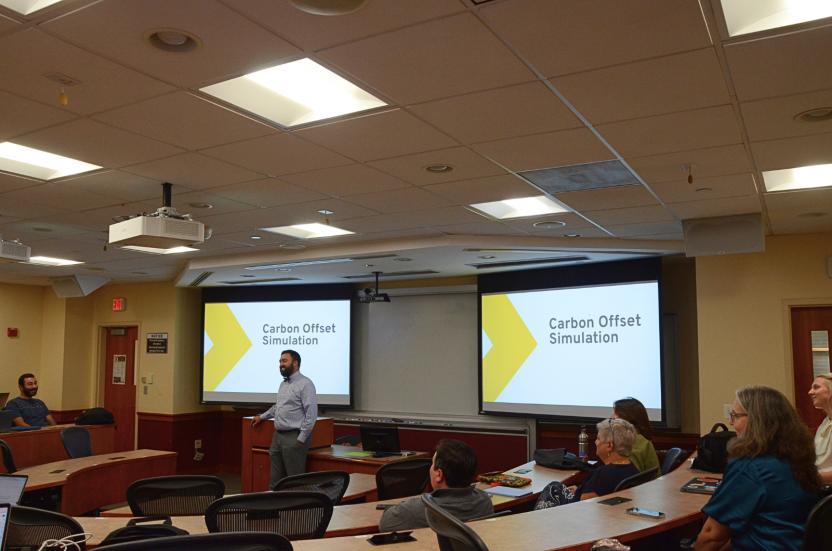
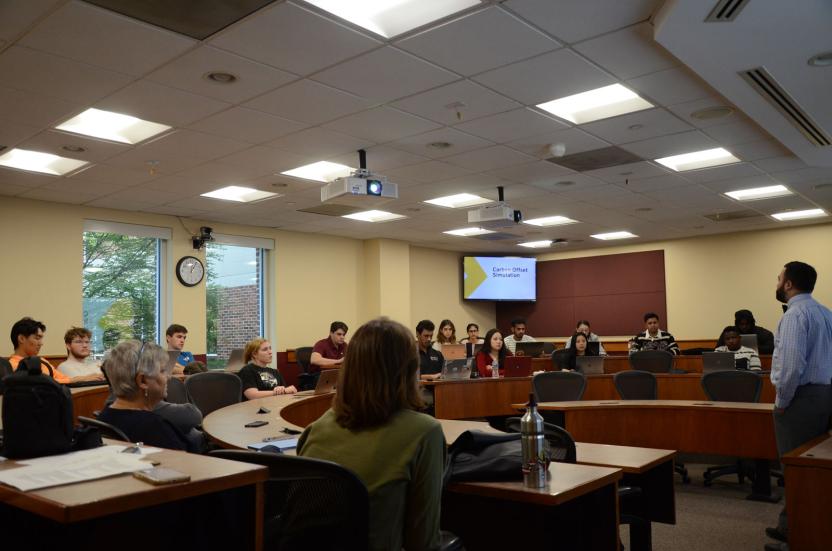
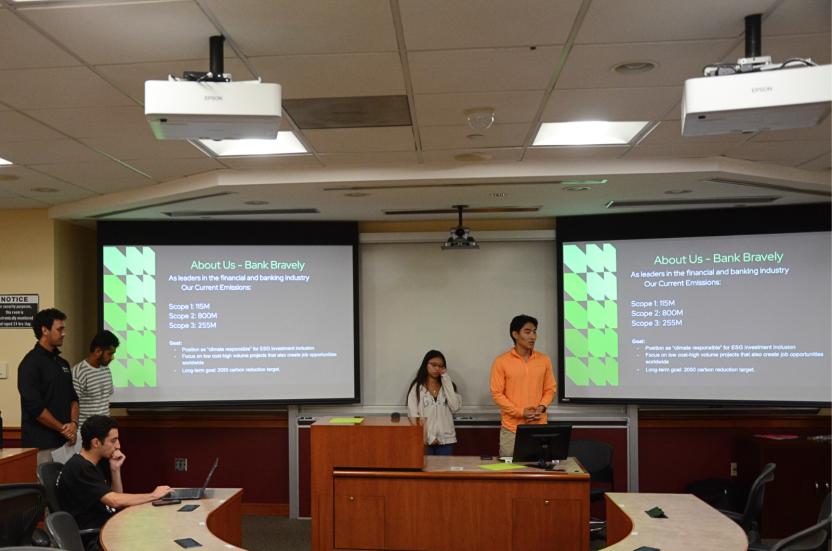
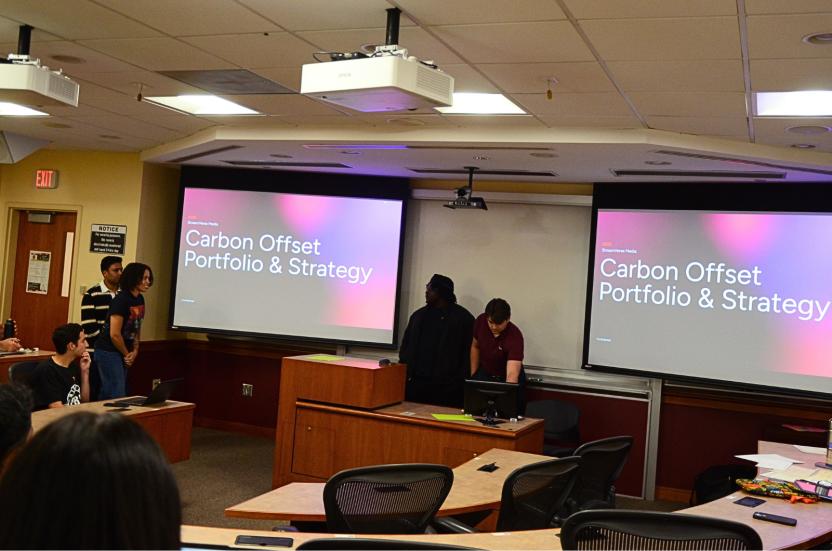
The Office of Sustainability developed an interactive Carbon Offset Market Simulation, which offers students a hands-on way to explore how sustainability principles play out in real-world business decision-making. Designed for undergraduate or graduate courses in sustainability, business, public policy, or environmental science, the simulation places students in the role of corporate decision-makers navigating the voluntary carbon offset market.
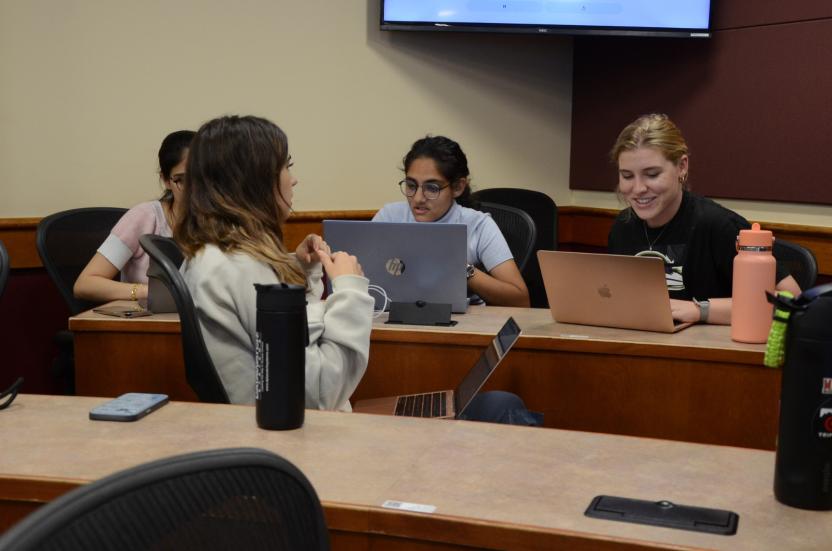
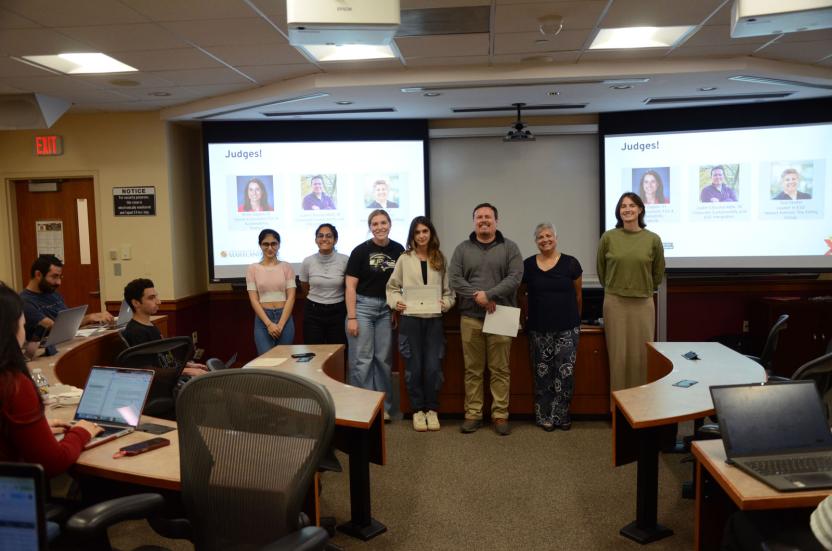
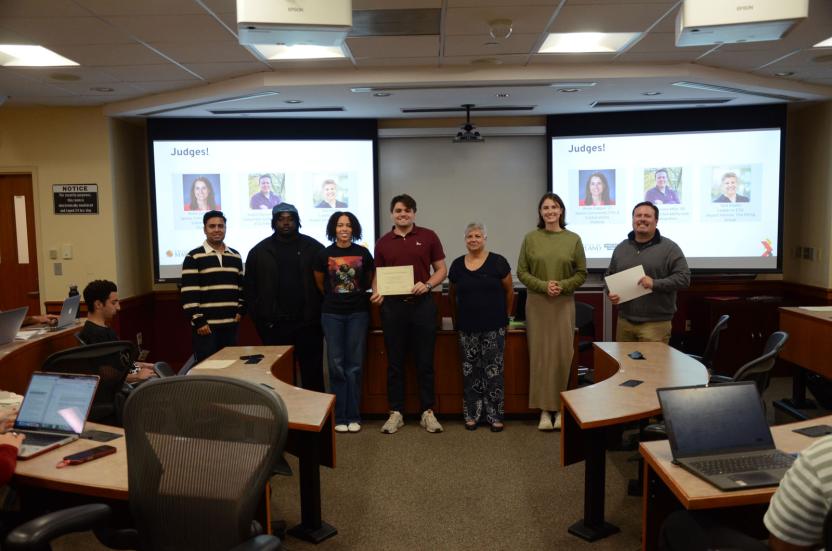
Student teams represent companies from different sectors and build carbon offset portfolios based on budgets, brand values, customer expectations, and third-party quality ratings. A “breaking news” twist introduces ethical and reputational challenges, prompting students to reassess their strategies and confront issues such as greenwashing and project integrity. The simulation concludes with in-character presentations defending portfolio choices to key stakeholders.
All instructional materials are provided below, including a detailed lesson plan, pre-readings, company profiles, portfolio-building tools, external ratings explanations, presentation templates, and optional reflection and assessment components. These resources can be used to run the simulation in faculty's own courses while giving students a chance to experience the complexity, uncertainty, and real-world pressures businesses face when addressing their own carbon footprints and ESG goals.
Global Change Biology
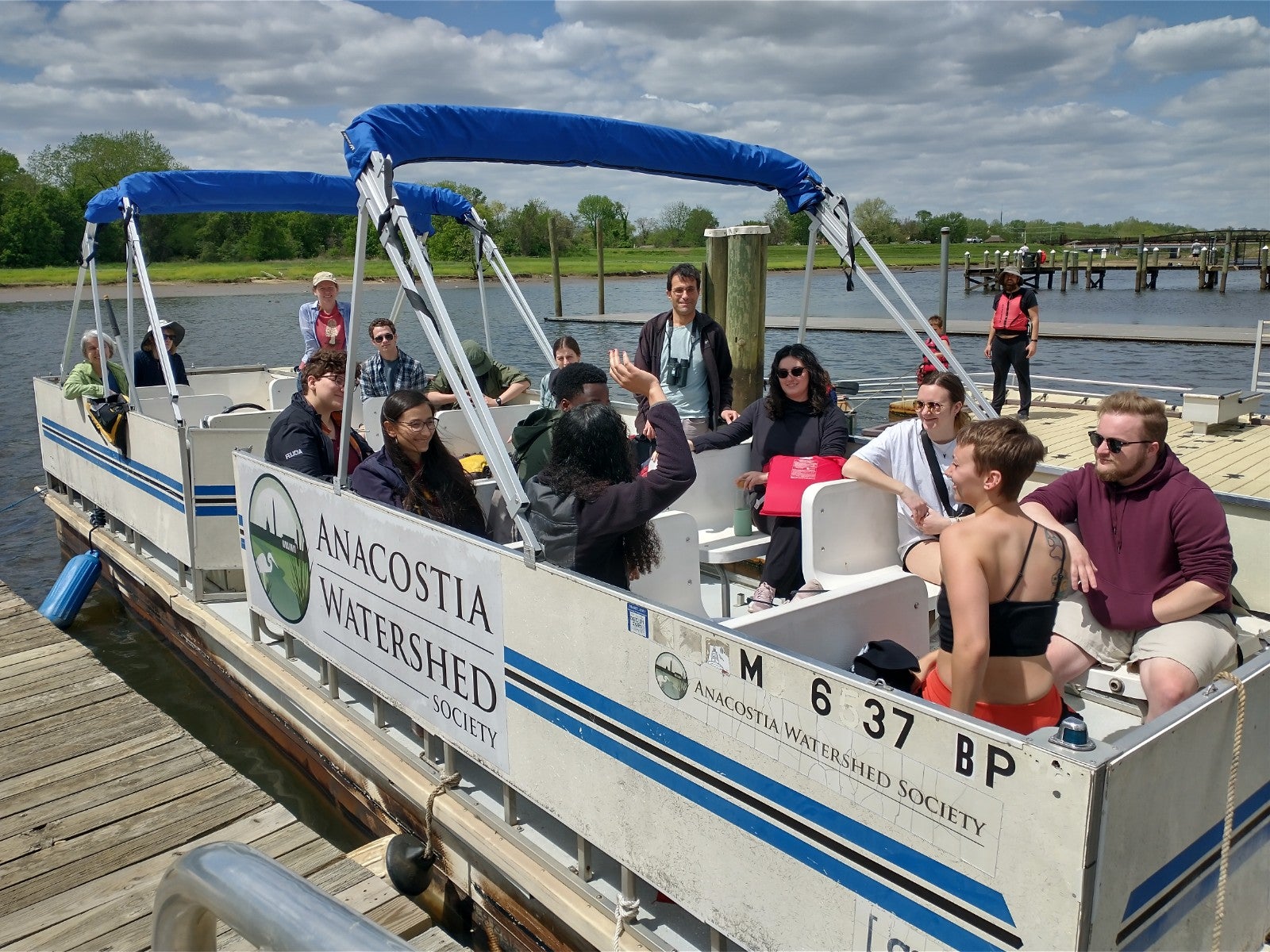
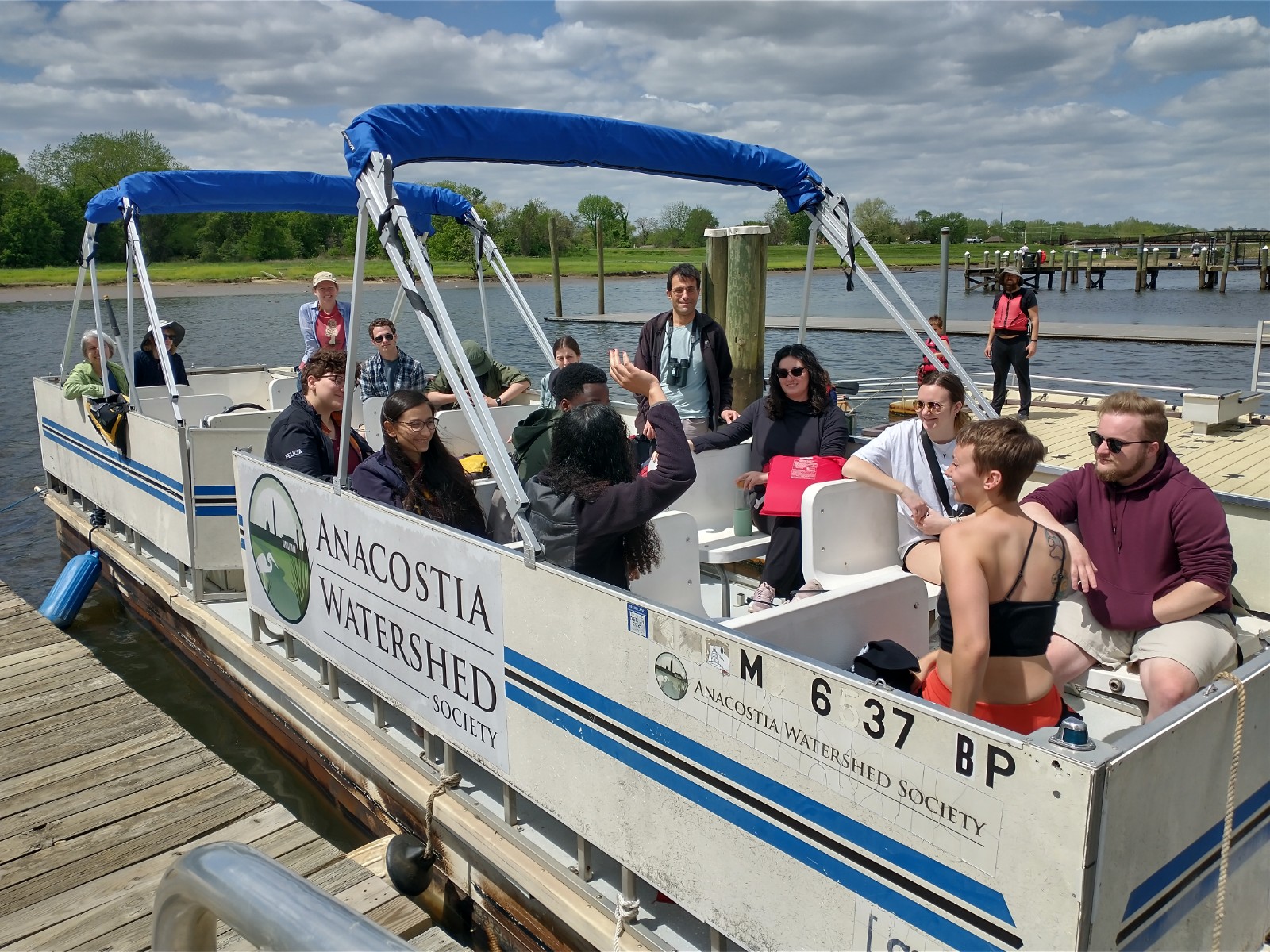
Global change biology in the Biological Sciences (BSCI) initiative was Funded by a 2022 Teaching & Learning Grant. Dr. Joshua Singer, Chair of Biology and Dr. Leslie Pick, Chair of Entomology, and a group of 15 faculty from the two departments developed an effort to introduce global change into the curriculum for the BSCI undergraduate major. The group worked to create new courses and retrofit existing ones with hands-on activities that stress the biological effects felt around the world. The funded two-year project supported three graduate students and four undergraduate students working with faculty to develop 18 activities used in several existing BSCI courses and two new courses: BSCI366: Environmental Physiology and BSCI426: Global Change Biology. One example activity was developed by entomology graduate student Lasair Ni Choclain to address conditions in the Chesapeake Bay that were beneficial for oysters. The activity utilized data from Eyes on the Bay that describe both optimal conditions for oysters at different periods in their life cycle and environmental data sampled at many sites across the bay. Students worked in teams to extract data and then compared conditions across bay to determine where oysters would grow best.