UMD Green Labs Program

Scientific research plays a pivotal role in advancing climate change awareness and solutions, but traditional lab practices consume excessive amounts of energy, generate copious volumes of waste, and deplete resources. Climate change requires a rapid response across sectors, including researchers who have a responsibility to address the impact of their operations. UMD's Green Labs Program is designed to:
- Empower every individual in science with the knowledge and tools to make a difference through their work
- Promote a thriving culture of sustainability in labs
- Encourage research to be conducted in a way that is aware of society, environment, and resources
Why are sustainable labs important?
Laboratories typically use more energy and resources per square foot than other buildings on campus due to:
- Continuous operation
- High ventilation/exhaust demands
- Energy-intensive, heat-generating equipment
- Water use for steam sterilization and other processes
- Need for electrical redundancy to critical research functions
- Single-use plastics and PPE in the experimentation process
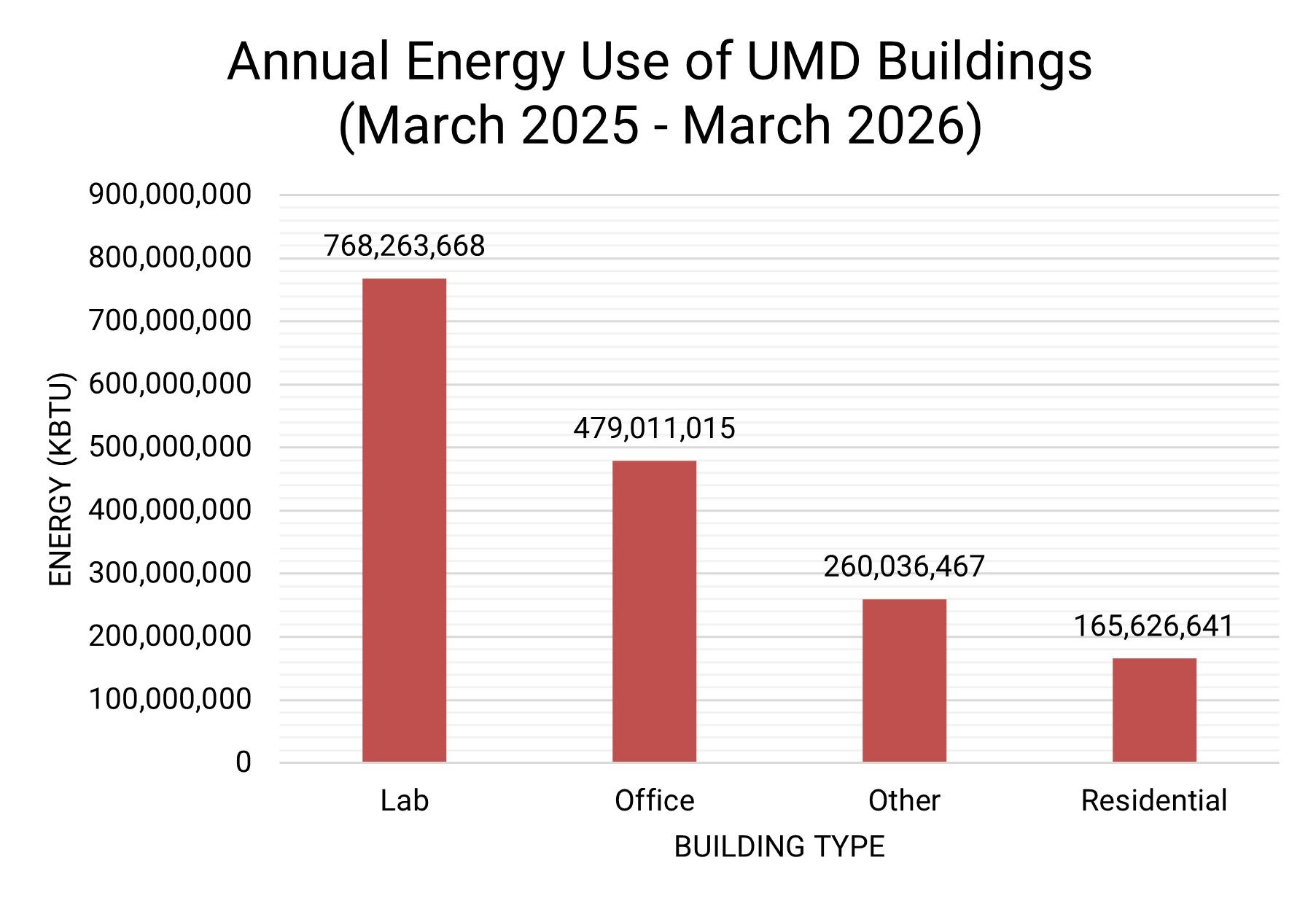
Thus, labs on campus represent a significant opportunity to improve energy efficiency and resource consumption by implementing sustainable practices. Fostering a culture of sustainability in labs aligns with UMD’s institutional goals of waste reduction, carbon neutrality, and sustainable procurement.
Read more: The relevance of sustainable laboratory practices (Freese et al., 2024)
Components of the Program
UMD's Green Labs program takes a three-pronged approach: increasing sustainability literacy through education and outreach, promoting responsible waste management through targeted recycling initiatives, and fostering a sense of shared purpose through community-building and cross disciplinary collaboration.
Sustainability Guidance
Online trainings, web and print materials exist to equip researchers with practical strategies to improve lab sustainability. Explore sustainability strategies within each of the categories below.
Procurement
Background
- Up to 56% of laboratory emissions come from purchasing (Purchases dominate the carbon footprint of research laboratories)
- Demand-side actions such as reducing consumable use, extending equipment lifetimes, repairing instead of replacing, and sharing instruments across labs can collectively reduce purchase-related emissions by 10-40%.
Ordering lab reagents
- For some common laboratory products, there may now be options to purchase a more sustainable version of your product without compromising on quality or performance. Many companies have implemented the (ACT) Ecolabel, which shows the environmental impacts of your lab reagents and supplies ads an "eco-nutrition label." To ensure integrity, products with the ACT label undergo an extensive audit by two independent third parties. The lower the Environmental Impact Factor (EIF) number, the lower the environmental impact.
- Buy smaller quantities for rarely used reagents. Smaller bottles reduce the risk of expired chemicals and minimize hazardous waste disposal.
Inventory Management
- Keep a paper or digital inventory (if you’re in the market for a platform, try: Rheaply, LabNotebook, Quartzy) to ensure you always know where your samples are and how many you have. Use rack, box, and sample labels to stay organized.
- Conduct regular inventory audits. Review chemical, consumable, and equipment inventories at least once per semester to prevent unnecessary re-purchasing.
Be conscious of shipping
- Consolidate orders to fewer shipments to reduce shipping emissions and packaging waste.
- Reduce delivery footprints through collective purchasing and bulk orders with multiple labs. By pooling resources and purchasing in bulk, you can not only save costs but also reduce packaging waste.
- Try to order products that avoid foam usage, as it is difficult to recycle. Suppliers like New England Biolabs and ThermoFisher Scientific offer completely recyclable cardboard coolers. The next best option would be vendor take-back programs such as the one offered by Millipore Sigma.
Hazardous Materials
Practice Source Reduction
- Definition: Any practice that reduces the amount of any hazardous substance, pollutant, or contaminant from entering any waste stream or otherwise being released to the environment before recycling, treatment, or disposal.
- Key Strategies
- Substituting with less hazardous materials, purchasing hazardous materials in smaller quantities, targeting chemicals for reduction, and modifying laboratory processes.
- Avoid using reagents containing arsenic, barium, cadmium, chromium, lead, mercury, selenium, and silver if a suitable alternative exists. (Arizona State University Hazardous Materials Minimization Plan, page 6)
- Avoid over-classifying waste as hazardous if it is eligible for non-hazardous disposal under regulations.
Online Resources
- MIT’s Green Alternatives Wizard can help you identify and replace harmful chemicals or reagents used in experimental processes.
- Use the DOZN tool to assess the sustainability of a reaction. Here is a webinar about how this tool works.
- Use a Solvent Selection Guide, which provides methodologies and visual aids that rank solvents to see if alternatives to your current solvent choices are available.
Water Conservation
Check for leaks and report them promptly
- Leaky faucets that drip once per second can waste 3,000 gallons of water per year. Check for leaks anywhere you have a line that constantly maintains water. You can find leaks on autoclaves, ice machines, and water cooled equipment. Once found, promptly report leaks and drips to Facilities Management.
Avoid single-pass cooling systems
- Single-pass cooling uses water once for cooling before discarding it. This practice, common in lab equipment like autoclaves and ice makers and for cooling chemical reactions, wastes large amounts of water and can cause flooding hazards. As an alternative, closed-loop chillers recirculate coolants indefinitely.
- Replacing single-pass systems with closed-loop chillers or recirculating water baths can save hundreds to thousands of gallons annually while improving safety and temperature control.
- Since recirculating water baths can be costly, you can create an affordable DIY alternative by using an ice bucket and an aquarium pump.
Only run equipment that uses water when full
- Ensure you’re only running water-intensive equipment—such as glassware washers, autoclaves, and dishwashers—when they’re completely full. Running partial loads wastes both water and the energy required to heat and pressurize it.
- If your lab’s schedule makes this challenging, coordinate shared wash days or establish a sign-up system so multiple groups can make the most efficient use of each cycle.
- Post water-saving signage near glasswashers and autoclaves.
Only use purified water when needed
- Purified water such as deionized (DI), distilled, or reverse osmosis (RO) water, is created through intensive filtration and treatment processes that require several gallons of tap water for every gallon produced.
- By reserving purified water for experiments or instruments that truly require it, labs can avoid overuse that shortens the lifespan of purification systems, increases operational costs, and wastes water and energy.
- Post water-saving signage near DI/RO taps.
Use a vacuum pump instead of a water vacuum aspirator
- Water vacuum aspirators use a continuous stream of water—about 2 gallons per minute—to create suction, wasting over 60,000 gallons per year if run just 2 hours a day. While water aspirators are less expensive initially and easy to use, they produce a weaker, less consistent vacuum and can draw hazardous materials into the water supply. In contrast, a vacuum pump provides a strong, stable vacuum without using water, making it more efficient and suitable for a wider range of applications, including those involving volatile solvents.
Energy Use and Efficiency
Electronic Equipment
- Plug Load: Equipment plug load accounts for approximately half of a research building's electricity use (JHU Green Labs, June 2025). To improve energy efficiency and reduce plug load, turn off and unplug equipment when not in use, use outlet timers to automatically power on and off equipment, and share equipment with other labs.
- Use a power strip/surge protector, or fully unplug the devices, so you can completely power down at the end of each day or when leaving the space for a significant amount of time.
- If available, use the “eco” mode on a device or appliance.
- Use smart power strips for equipment with standby modes (shakers, baths, hot plates).
Fume Hoods
- Shut the sash when not in use–a closed fume hood is the most effective at protecting lab users and the most energy efficient. Even more impactful would be decommissioning a rarely used fume hood and sharing with a nearby lab, an action that could save between 11,000-22,000 kWh per year (University of Michigan Sustainable Labs, Most Impactful Practices).
- Optimize sash height during operation by following the guidelines on the fume hood for the maximum allowable working sash height.
- Consolidate chemicals and avoid using fume hoods as storage cabinets which can obstruct air flow.
- Lock/decommission fume hoods not used for extended periods of time.
- Consider adding “Shut the Sash” stickers or signage to remind lab members to shut the sash.
Ultra-low temperature freezers (ULTs)
- Perform regular freezer maintenance: clean the air filter to remove dust and grime, regularly de-ice the freezer by scraping ice from around the door and rubber gasket, and perform a total thaw of the unit at least once a year.
- “Chill up” freezers by raising the temperature from -80° to -70°C to save 2-4 kWh/day in energy. -70° C has been proven safe for most if not all samples. Increasing the temperature of your freezer saves electricity and prolongs the life of your compressor.
- Maintain at least 6 inches of space on all sides of the freezer and keep ULTs out of direct sunlight.
Biosafety Cabinets (BSCs)
- Keep the air flowing by avoiding blocking front or rear air vents.
- Consider going vertical for storage space. Clean, sterile racks placed inside the hood can provide more in-hood storage while avoiding blocking air vents.
- Turn on UV for only 30-60 min after use.
- Keep sash closed when not in use to maintain a sterile surface.
- Ensure your BSC is certified annually.
Miscellaneous Energy
- Complete an energy "power down" before holidays and breaks.
- When replacing old units or adding new cold storage, select an Energy Star appliance.
- Avoid running autoclaves/washers during peak hours to reduce both water and energy strain.
- Put equipment on a timer to reduce energy demand. Candidate appliances include drying ovens, water baths, heat blocks, or anything else that qualifies for overnight downtime before switching back on automatically in the morning.
Waste Minimization
Recycling
- Use Facilities Management's brown battery collection system to recycle batteries.
- Recycle old office furniture and lab equipment with Terrapin Trader.
- Recycle glass in purple dumpsters on campus.
- Recycle paper/cardboard, rinsed #1 and #2 plastics in blue recycle bins on campus.
Replace disposables with reusables
- Background: The Global Warming Potential (GWP) of plastics is greater than that of glass. The majority of the emissions associated with both materials come from the production and extraction of the raw materials. When plastics are recycled, the materials are ‘downcycled’, meaning that the quality is compromised and eventually they can no longer be recycled. With glass, the raw material has endless potential.
- Choose glass or metal over plastic when possible for falcon tubes, pipettes, filter bottles, petri dishes, Bijou bottles, and test tubes.
- Reuse/wash plastics when possible: pipettes & pipette tips when aliquoting, gloves (decontaminate with ethanol), tubes and cuvettes, beakers & tip-collection.
Reduce single use
- Micro-size reactions and experiments where possible.
- Refill old pipette tip boxes with pipettes tips purchased in bulk.
- Use pre-diluted antibodies.
Scale Down Experiments
- One way to measure the impact of waste created by experiments is by calculating the E factor, which is the measured weight of waste divided by the weight of the end product. After considering that number, assess if any reactions could be done on a smaller scale while still getting the same results. Doing so for reactions that are run frequently can help make a large impact and works towards principles one and two (Waste Prevention and Atom Economy) of the 12 Principles of Green Chemistry.
Miscellaneous
- Perform a waste audit to ensure trash, recycling, and compost are being used correctly.
- Share/make available surplus with other labs.
- Set up the printer to print double sided as the default.
- At the start of the new academic year, consider a full inventory check to understand what samples, reagents, and stocks you have on hand, and assist in cleaning up and freeing up cold storage space.
Green Chemistry
Definition
Green chemistry is the design of chemical products and processes that reduce or eliminate the use or generation of hazardous substances. Green chemistry applies across the life cycle of a chemical product, including its design, manufacture, use, and ultimate disposal. (U.S. EPA). Green chemistry:
- Prevents pollution at the molecular level
- Is a philosophy that applies to all areas of chemistry, not a sub- discipline of chemistry
- Applies innovative scientific solutions to real-world environmental problems
- Results in source reduction because it prevents the generation of pollution
- Reduces the negative impacts of chemical products and processes on human health and the environment
- Lessens and sometimes eliminates hazard from existing products and processes
- Designs chemical products and processes to reduce their intrinsic hazards
- Underpins a sustainable future where the materials and chemicals that make us the basis of our society and economy are healthful rather than toxic, renewable rather than depleting, and degradable rather than persistent (Designing for a green chemistry future)
12 Principles
The 12 principles of Green Chemistry were developed by Dr. Paul Anastas and Dr. John Warner and published in the landmark text Green Chemistry: Theory and Practice. These guiding principles gave chemists the framework for making a greener chemical, process, or product and were recognized as an upstream solution to pollution prevention by the scientific community. The 12 principles are:
- Prevention
- Maximize Incorporation of Materials
- Use and Generate Less Toxic Materials
- Design Safer Chemicals
- Safer Solvents and Auxiliaries
- Design for Energy Efficiency
- Use of Renewable Feedstocks
- Reduce Derivatives
- Use Catalysts
- Design for Degradation
- Real-Time Monitoring to Prevent Pollution
- Accident Prevention
For more information, check out the American Chemical Society’s Green Chemistry Institute (ACS GCI) and their explanations of the principles.
Digital Sustainability
Background
- Digital activity including data storage, computing, cloud use, instrument software, and email create hidden but significant emissions due to the energy demands of servers, data centers, cooling systems, and network infrastructure. Practicing digital sustainability can reduce your lab’s carbon footprint, lower storage costs, improve system performance, and minimize cybersecurity risks.
Reduce data storage footprint
- Perform quarterly data cleanouts to delete redundant, outdated, or low-quality data after proper review.
- Compress large files (e.g., .zip, .gz) where appropriate to reduce storage size.
Be mindful of cloud storage
- Proactively delete unused cloud files rather than letting them accumulate indefinitely.
- Perform quarterly data cleanouts to delete redundant, outdated, or low-quality experimental data after proper review.
- Manage subscriptions and unsubscribe from newsletters you no longer need.
Communications
Communicate sustainable lab practices on an ongoing basis
- Include information regarding sustainability best practices during lab orientation training and add sustainability expectations to onboarding checklists.
- Include current/new sustainable lab process information and goal progress in lab meetings on a regular basis (at least 1x per month).
Get Involved
Kitchens
- Have available reusable dishware and utensils in shared kitchens, and don’t offer disposables.
- Use a coffee pot instead of disposable K cup/pod coffee makers.
- For catering/meals covered by the lab, consider offering a vegetarian or vegan spread.
- Use the compost bin correctly, which includes disposal for food scraps, soiled paper, paper containers, tea bags, coffee grounds, and compostable plastics. Learn more about composting on campus.
Lab Plastics Recycling
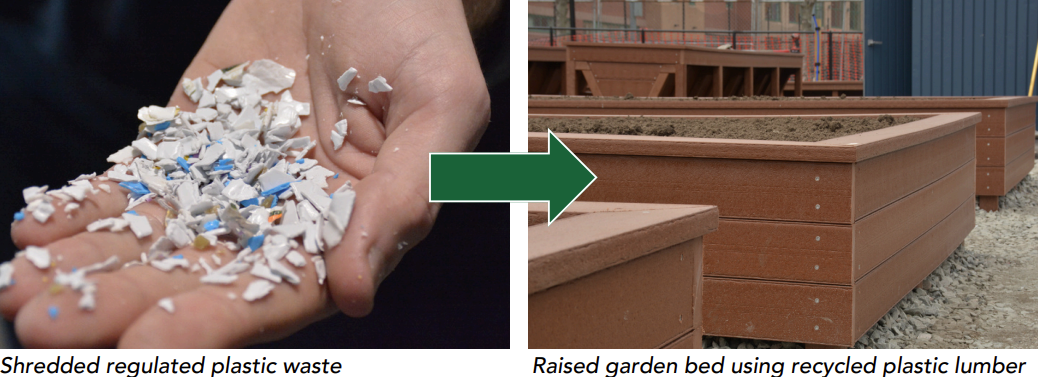
UMD participates in Triumvirate Environmental's Plastics4Purpose program which transforms regulated plastic waste into durable high quality plastic lumber. This program allows for the repurposing of complex, hard-to-recycle materials that would otherwise be incinerated in a landfill. The cradle-to-grave process is outlined below:
- Regulated plastic waste is collected from labs on campus and transported to Triumverate Environmental's facility in Jeannette Pennsylvania.
- The plastic waste is shredded and treated with and EPA-approved sanitation process to make the waste inert.
- The shredded plastic is melted, extruded, molded and converted into plastic lumber.
- The recycled plastic lumber is used for a variety of applications including garden beds, retaining walls, benches, and pallets.
Community of Practice
The Green Labs program includes opportunities for cross-disciplinary collaboration with researchers across the university interested in sustainability. Building this community fosters accountability, spreads innovative practices, and creates a supportive culture.
The quarterly Green Labs newsletter (launching fall 2026) is the best place to hear about upcoming events, opportunities, and resources related to sustainable labs. Semesterly in-person meet-ups including lunch and learns, tours, guest speakers, will give participants the opportunity to learn from each other, gain recognition for their efforts, and connect with other researchers. Email dfrye@umd.edu to get involved.
Case Study: How One of UMD’s "Green Labs" Shed 55,000 Pounds of Greenhouse Gas Emissions
University research labs deliver crucial innovations that create healthier, better lives for all of us, but they have a hidden impact—they can consume massive amounts of energy, contributing to climate change. That chemical fume hood that removes unsafe air? It can use as much energy as three average American homes. Toss in a few lab freezers holding a constant -80 degrees Celsius, and energy consumption adds up quickly.
In 2020, a collaborative effort between the Office of Sustainability and the Department of Engineering & Energy found ways to reap the benefits of science while reducing the environmental impacts. An early participant in the program, cell biology and molecular genetics Professor Norma Andrews, found she was able to eliminate more than 55,000 pounds of annual carbon dioxide emissions by instituting some relatively simple changes.
It started with a lab walk-through and presentation to who talked about energy-saving tactics for the Andrews Lab that would not impede research. “We learned a lot from Emery's visit and immediately implemented his suggestions by ‘retiring’ one old -80°C freezer, defrosting refrigerators, adding timers to water baths, and keeping fume hoods closed when not in use,” Andrews said.
The hoods, which put an extra load on a building’s HVAC systems when left open, are by far the No. 1 culprit, Emery Wolf said—something most researchers aren’t aware of. They’re often left open even when not needed, flushing heated or air-conditioned air out of the building.
“When ventilation can be reduced, energy is saved, and less carbon is released to the atmosphere,” Wolf said.
Charmaine Yuan ‘20, a biological sciences and psychology double major and a sustainability minor, took the sustainability lead for the lab. While focused on research goals, it’s easy to leave equipment on and consuming energy, Wolf said.
Annual pounds of CO₂ the Andrews Lab cut using simple steps:
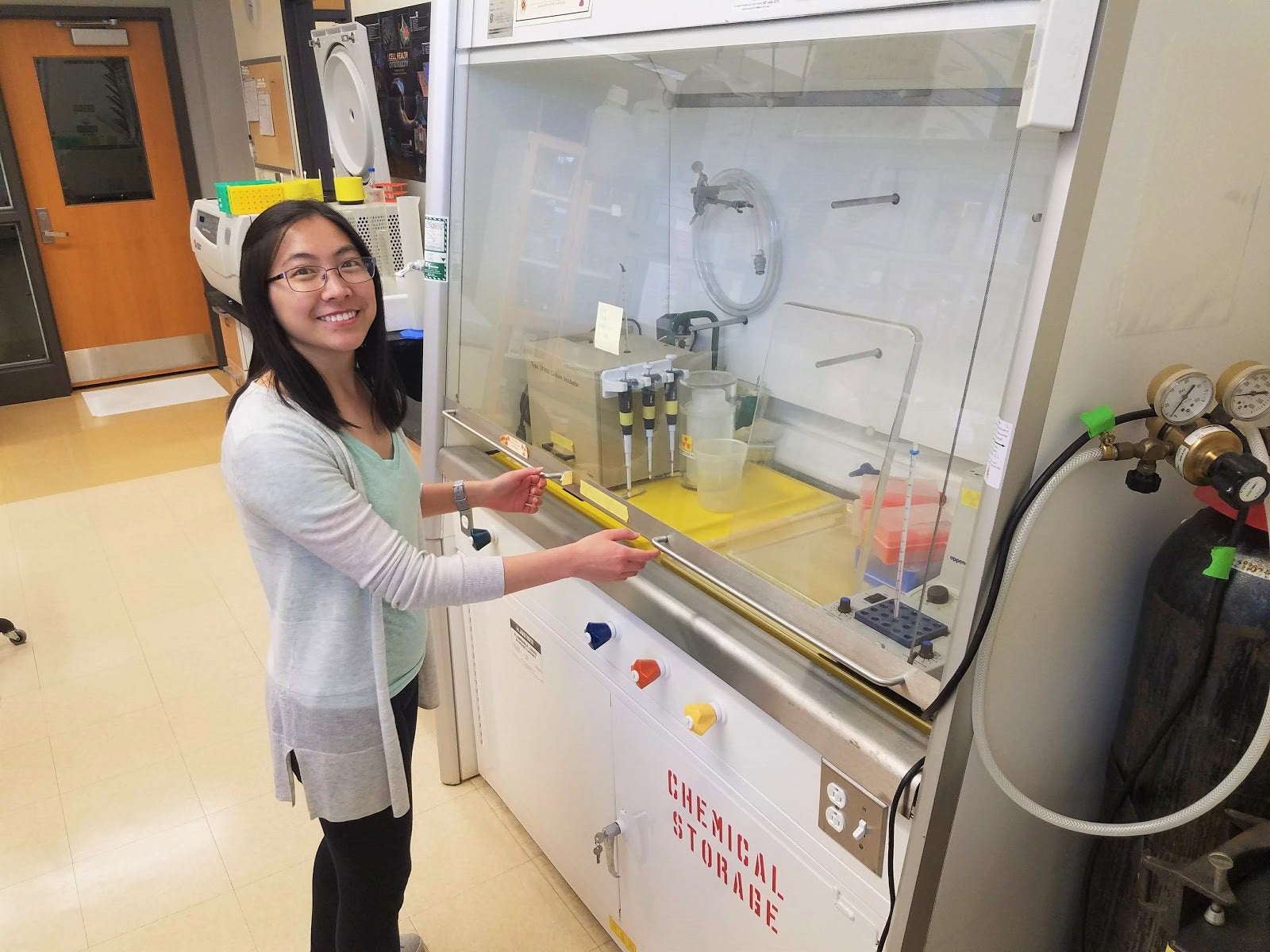
- Shutting two fume hoods: 41,756
- Decommissioning a freezer: 9,876
- Defrosting a freezer annually: 1,481
- Defrosting nine mini fridges: 1,083
- Turning off a mini fridge: 602
- Turning off a water bath: 201
- Putting a water bath on a timer: 100
Total savings: 55,099 pounds of CO₂ emissions